
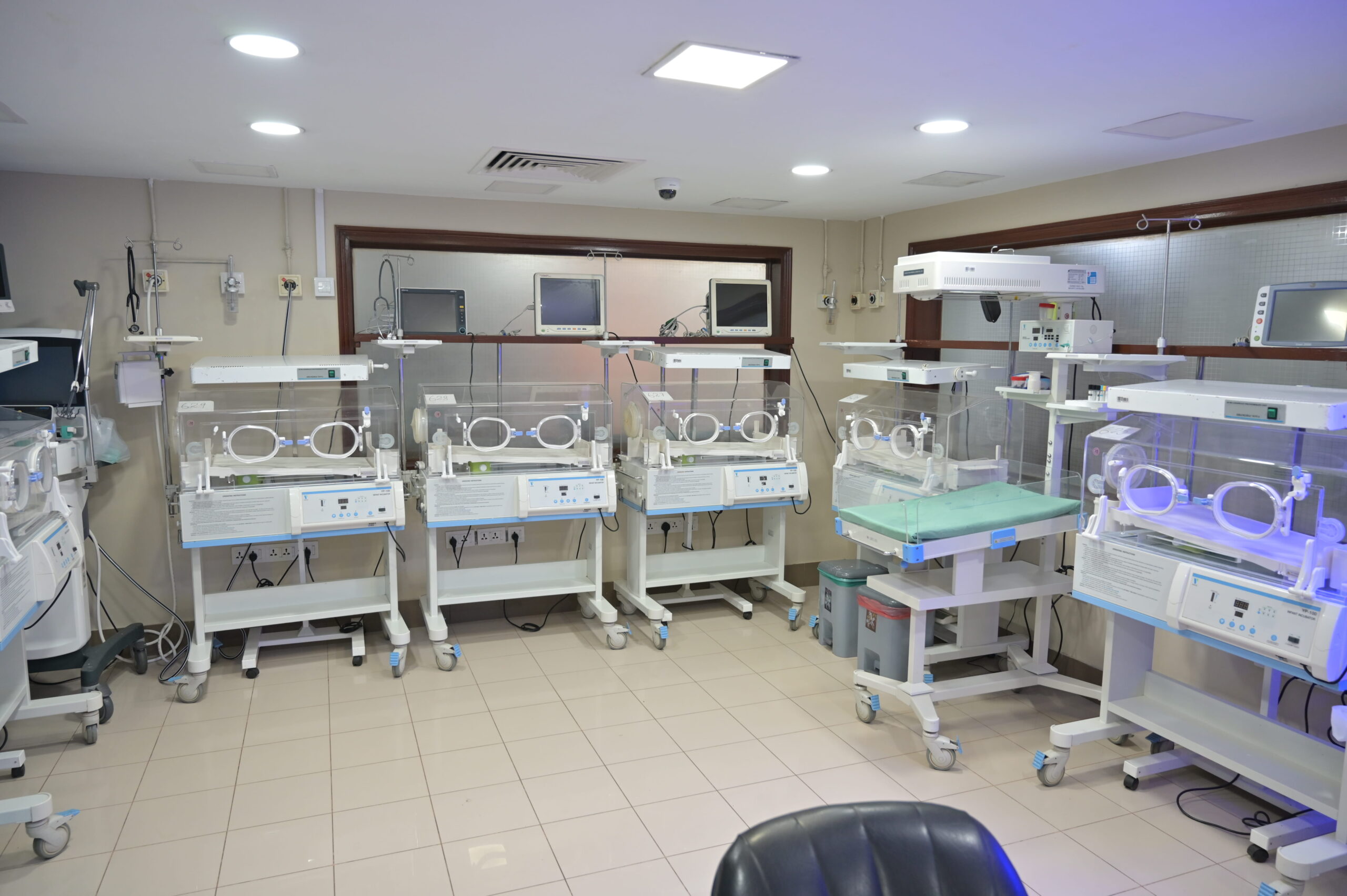
When Every Second Matters
A high fever turns into a seizure. A cough turns into a struggle to breathe. An accident happens in seconds. In moments like these, parents don’t have time to research; they need to know help is close and ready.
Burhani Hospital’s Pediatric Intensive Care Unit (PICU) exists for exactly this. Pediatric intensivists, critical-care nurses, and continuous monitoring are available around the clock in Karachi, so that when a child needs the highest level of care, it’s here.
What Is a PICU?
A PICU is the part of the hospital built for children whose condition is too serious for a general ward. It offers continuous monitoring, more nurses per child, and equipment like ventilators that need constant supervision.
It’s different from a NICU, which treats only newborns, and from an adult ICU, which is sized and dosed for adults. A PICU is built specifically for children, from infancy through the teenage years.
When Does a Child Need the PICU?
Bring your child to our 24/7 Emergency Department if you notice:
- Severe pneumonia or breathing difficulty
- Dengue with warning signs
- Sepsis or serious infection
- High fever with complications
- Severe asthma attack
- Head injury
- Road accident
- Near-drowning
- Burns
- Poisoning
- Seizures that won’t stop
- Diabetic ketoacidosis
- Snake bite
- Cardiac problems
- Close monitoring after surgery
You don’t need to know which of these applies. Our team will assess your child immediately and decide.
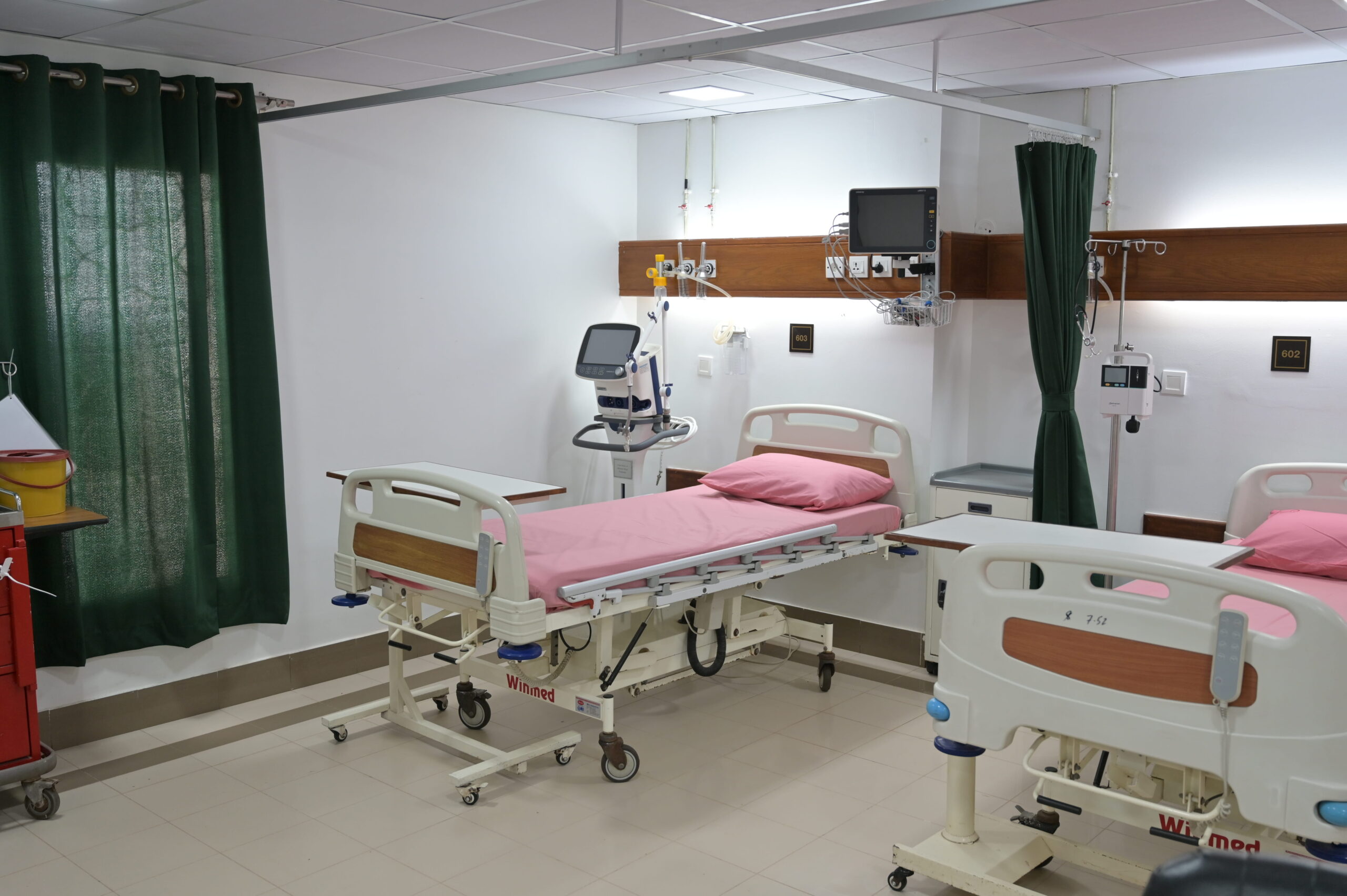
Our PICU Services
Mechanical Ventilation & Respiratory Support
Pediatric-specific ventilators support children who can’t breathe adequately on their own, under constant supervision.
Continuous Vital Sign Monitoring
Heart rate, oxygen, blood pressure, and breathing are tracked around the clock, so changes are caught early.
Emergency Stabilization
Children arriving through our Emergency Department in critical condition are stabilized before PICU admission.
Post-Operative Critical Care
Children recovering from major surgery are watched closely during the most vulnerable hours after the operating theatre.
Sepsis & Infection Management
Targeted antibiotics, fluids, and monitoring for children with infections severe enough to affect the whole body.
Trauma & Poisoning Care
Rapid stabilization for children affected by accidents, injuries, or ingested substances.
Family Communication
Daily updates from the medical team, so you always know your child’s plan and progress.
Conditions We Treat
- Respiratory failure & severe asthma — breathing support and medication when a child can’t get enough oxygen on their own
- Pneumonia & bronchiolitis — close monitoring of oxygen levels and breathing effort in severe lung infections
- Sepsis & septic shock — rapid antibiotics and fluid management to stop infection from affecting the whole body
- Meningitis & encephalitis — intensive monitoring for infections affecting the brain and spinal cord
- Trauma — stabilization and monitoring after accidents or falls, including injuries not visible right away
- Poisoning — treatment and monitoring for delayed effects after ingesting a harmful substance
- Burns — critical monitoring for fluid loss and infection risk in serious burns
- Post-operative monitoring — close observation after major or high-risk surgery
- Cardiac emergencies — monitoring and treatment for heart rhythm or heart failure problems
- Neurological emergencies — care for prolonged seizures and other brain-related crises
- Renal failure — support for children whose kidneys are struggling to function
- Multi-organ dysfunction — coordinated care when more than one organ system is affected at once
- Dengue with warning signs — monitoring for dehydration, bleeding and shock
- Diabetic ketoacidosis — careful fluid and insulin management for this diabetes emergency
- Near-drowning — monitoring for lung and brain complications after a drowning incident
- Snake bite — monitoring and treatment for systemic effects of venom
How a Child Reaches the PICU
Emergency → Assessment → Stabilization → PICU Admission → Continuous Monitoring → Recovery → Ward → Discharge
A child may arrive in the PICU straight from the Emergency Department, from the operating theatre after major surgery, transferred from a general ward if their condition worsens, or referred from another facility.
What Happens in the First Hour
- Airway, breathing and circulation are checked first
- Monitoring is attached — heart rate, oxygen, blood pressure
- Blood tests are drawn
- Imaging is ordered if needed
- Relevant specialists are brought in
- A treatment plan is built and explained to you
Meet Our Pediatric Critical Care Team
- Pediatric Intensivist — leads your child’s critical care and treatment plan
- PICU Nurse — trained in pediatric critical care, monitoring minute to minute
- Respiratory Therapist — manages ventilators and breathing support
- Anesthetist — supports airway management and sedation when needed
- Pediatrician — provides ongoing general pediatric oversight
- Pediatric Surgeon — involved for surgical or post-operative cases
- Neurologist / Cardiologist — brought in for brain- or heart-related conditions
- Nutritionist — plans safe nutrition during recovery
- Pharmacist — oversees precise pediatric medication dosing
- Laboratory & Radiology teams — provide the test results and imaging the team relies on
Advanced PICU Technology
- Mechanical ventilation — takes over or supports breathing
- Multi-parameter monitors — track heart rate, oxygen, blood pressure and breathing continuously
- Infusion pumps — deliver fluids and medication at precise rates
- Portable X-ray — imaging at the bedside, without moving your child
- Isolation capability — protects other patients when infection control is needed
- Defibrillator & resuscitation equipment — on standby for cardiac emergencies
Meet Our Pediatric Critical Care Team
- Pediatric Intensivist — leads your child’s critical care and treatment plan
- PICU Nurse — trained in pediatric critical care, monitoring minute to minute
- Respiratory Therapist — manages ventilators and breathing support
- Anesthetist — supports airway management and sedation when needed
- Pediatrician — provides ongoing general pediatric oversight
- Pediatric Surgeon — involved for surgical or post-operative cases
- Neurologist / Cardiologist — brought in for brain- or heart-related conditions
- Nutritionist — plans safe nutrition during recovery
- Pharmacist — oversees precise pediatric medication dosing
- Laboratory & Radiology teams — provide the test results and imaging the team relies on
Advanced PICU Technology
- Mechanical ventilation — takes over or supports breathing
- Multi-parameter monitors — track heart rate, oxygen, blood pressure and breathing continuously
- Infusion pumps — deliver fluids and medication at precise rates
- Portable X-ray — imaging at the bedside, without moving your child
- Isolation capability — protects other patients when infection control is needed
- Defibrillator & resuscitation equipment — on standby for cardiac emergencies
PICU vs. NICU vs. Adult ICU
| PICU | NICU | Adult ICU | |
|---|---|---|---|
| Who it’s for | Infants to teens, critically ill | Newborns, premature/birth complications | Adults |
| Care team | Pediatric intensivists, PICU nurses | Neonatologists, NICU nurses | Adult intensivists |
| Common cases | Sepsis, trauma, poisoning, respiratory failure, post-op care | Prematurity, birth complications | Heart attacks, strokes, major trauma |
Your Child’s Patient Journey
Arrival → Emergency Assessment → Diagnosis → PICU Admission → Continuous Monitoring → Recovery → General Ward → Discharge
Parent Resources — What to Bring
- Your child’s ID/B-Form and your CNIC
- Any previous medical records
- Current medications, if any
- Insurance details, if applicable
- Vaccination card
Get Immediate Pediatric Critical Care
If your child is having a medical emergency, come straight to Burhani Hospital’s Emergency Department. Our PICU team is ready 24/7 to assess, stabilize, and admit without delay.
24/7 Emergency Department
Faiz Muhammad Fateh Ali Rd, New Chali, Karachi
UAN: (021) 111 847 164 | (021) 33 22 00 49
Frequently Asked Questions
If your child has severe breathing difficulty, is unresponsive, has a seizure that won’t stop, or shows signs of shock, come to our 24/7 Emergency Department right away.
Severe pneumonia, dengue with warning signs, sepsis, prolonged seizures, severe asthma, trauma, poisoning, and close monitoring after major surgery, among others.
PICU treats infants through teens, NICU treats newborns only, and adult ICU is built for adult patients, each with different staff, equipment, and dosing.
Yes, within infection-control guidelines.
The team will advise once it’s safe, and guide you on the right method.
From a single day to several weeks, depending on the condition. The team reassesses daily.
Most procedures cause minimal discomfort, and pain relief or sedation is used when needed.
Babies with complex needs outside the newborn period, yes. Newborns with birth-related issues go to the NICU.
Our pediatric surgical team is available on-call and works directly with the PICU team.
Most children move to a general pediatric ward for continued recovery before going home.
Yes, when an attack doesn’t respond to initial emergency treatment.
A machine that supports or takes over breathing when a child can’t breathe adequately alone.
Only if medically necessary, and the team will explain why.
Yes, and it’s directly connected to our Emergency Department.
No — critical cases come through the Emergency Department.
Many children do. The team will outline any follow-up before your child goes home.